Why AI Isn’t Working in Sales and How to Fix the Strategy
Why AI isn't working in sales: teams hand it the customer's pain points and the value proposition. What to give AI, what to keep human, and how to reset.


Why AI isn’t working in sales comes down to one mistake: most teams hand the tool the exact work that takes human judgment, which is deciding what pain the buyer has and which value proposition speaks to it. AI pays off when it absorbs the operational work (account research, first drafts, CRM upkeep) and your team spends the time it frees up talking to buyers and closing.
I learned this firsthand. At a Y Combinator startup in global payroll and international hiring, one that competes with Deel and now moves billions of dollars through its virtual wallet and Visa card, we sent 12,000 generic emails a month, segmented by industry. We burned the domain and still didn’t book enough qualified meetings. The jump came with personalization: we went from closing one deal every two months to closing six a month. This article covers what breaks in most teams, how to tell whether the problem is the tool, the process, or the strategy, and what a well-run transition looks like.
Why isn’t AI producing results for your sales team?
Four causes carry most of the weight.
The tool gets bought before the problem is defined. Someone sees a demo, the team adopts the platform, and nobody wrote down which number had to improve. You end up automating a process that had already stopped producing.
AI gets used to raise volume. It’s the easy path, because AI makes every extra email nearly free. If volume was the problem, you now amplify it faster. The next section shows what that did to our domain.
The data can’t be trusted. According to Salesforce’s State of Sales report, only 35% of sales professionals fully trust the accuracy of their data. An AI fed shaky data writes messages that sound sure of themselves and get the facts wrong.
Thinking gets delegated. This is the cause that weighs most. People let AI identify customer pain points and design the value proposition. AI proposes generic pains because it sees market patterns, while your buyer has a specific pain, with a budget, a deadline, and a boss asking about results. Turning that into a message takes expertise, judgment, and an empathy for language that comes from a person who has been in that conversation.
What happens when you use AI to send more volume?
Here is how it went at that startup. We sent 12,000 generic emails a month, segmented by industry. The domain burned, and qualified meetings fell short. We wanted to personalize, but by hand the volume we could write was very low.
We landed on a 70/30 split: 30% of emails personalized and 70% generic, with name and company snippets. The personalized ones performed five times better. What held us back was the time it took to write, review, and research each account.
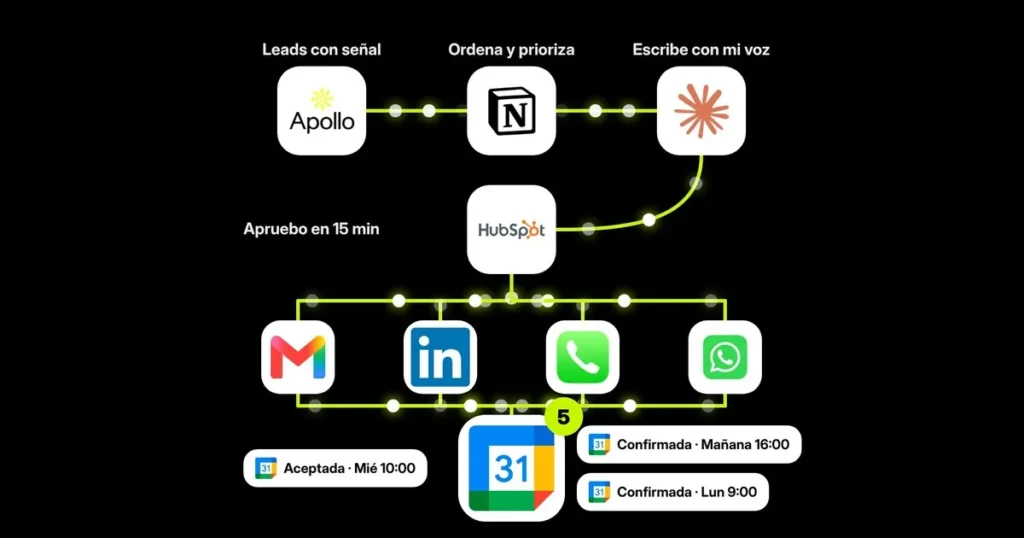
That’s where AI changes the math. Today it speeds up exactly that work and delivers real personalization without burning the domain and without sending generic blasts. It removes the cost of personalizing. The judgment about who to write to and what to say stays human.
Deliverability rules have also tightened. Since February 1, 2024, Google’s email sender guidelines require SPF, DKIM, and DMARC authentication from anyone sending more than 5,000 messages a day to Gmail accounts, and they ask senders to keep the reported spam rate under 0.10% and never reach 0.30%. A domain with a bad reputation drags your legitimate emails down with it, and recovering it takes time.
Is it a tool problem, a process problem, or a strategy problem?
Before you switch platforms, locate the symptom. This table helps trace the source of the problem in a team that already uses AI.
| Symptom | Likely cause | What to check first |
|---|---|---|
| Replies, but few qualified meetings | Strategy | Who you write to and whether the value proposition addresses a real pain for that buyer |
| High send volume, few replies, bounces or spam placement | Process | Volume per domain, list quality, authentication, and reported spam rate |
| Well-written messages that sound like everyone else’s | Strategy and context | What business-specific information the AI receives and who reviews the language |
| Meetings that don’t move to a proposal | Qualification and closing process | Discovery questions, qualification criteria, and the call playbook |
| The team doesn’t use the tool | Adoption | Whether anyone taught the actual workflow, using the team’s real accounts |
If more than one row describes you, order matters. Fix the strategy first, because the process and the tool inherit its mistakes.
What should AI do, and what should a person do?
AI does operational work well. It researches an account in minutes, writes a first draft with context, summarizes calls, updates the CRM, and helps decide who to contact first. All of that gives hours back to the rep.
A person owns what decides whether the message works:
- Deciding which pains your ideal customer has and which ones they would pay to solve.
- Writing the value proposition in the buyer’s own words, and checking that the AI draft sounds like someone who knows the industry.
- Choosing who not to write to.
- Taking the call, which is where deals close.
At that startup, personalizing performed five times better, and time was the only obstacle. With AI absorbing the research and the first draft, time stopped being the constraint, and the team put it into the part of the job you can’t delegate: talking to buyers.
What does a well-run transition look like?
I’ve spent 12 years selling in global, fast-growing markets, and this is the order I use.
First, the strategy gets reviewed by someone who has sold in contexts like yours: ICP, pain points, value proposition, channels, and what gets said to whom. This review saves the most, because it stops you from building processes on a wrong premise.
Next, the playbooks get written: what to say at each stage, how to qualify, how to handle an objection, and how to prepare for a call. A clear playbook is also the context AI needs to stop sounding generic.
Then AI gets built into the daily workflow, and the team learns to use it with their own accounts and their own CRM. The goal is to cut operational load and raise the time each person spends on the business, on closing, and on the human call.
Last comes coaching through lead generation and closing, based on real conversations. We track qualified meetings, sales cycle, and closed deals, and we skip the count of emails sent.
In our case, personalizing is what moved the number: we went from closing one deal every two months to closing six a month, with a two-week sales cycle, on SMB and mid-market accounts with €7,000 to €12,000 in MRR. Today AI multiplies and scales that finding, because it personalizes every account without the time it used to cost by hand.
This is the support we provide at RevAI for teams that want to fix their strategy and in the adoption and results stage. If you want the full picture of building the system, here’s our guide to AI sales strategy. And if you’re deciding who to work with, this article helps you choose an AI implementation partner.
Frequently asked questions
How long does it take to see results after fixing the strategy?
The first signals are replies and qualified meetings. Closed deals follow, depending on your sales cycle. Ours was two weeks, so the effect on deals showed up quickly. With longer cycles, track qualified meetings first.
Should you stop sending generic emails?
For accounts that can pay well, yes. With AI, personalizing is no longer a time problem, and a generic email to a valuable account wastes an opportunity and adds reputation risk to your domain.
Can AI replace an SDR?
It can absorb much of the operational work: research, drafts, and follow-up. Judgment about who to write to and with which value proposition, and the conversation with the buyer, still need a person.
Which metrics should you track?
Qualified meetings, reply rate from target accounts, sales cycle length, and closed deals. The number of emails sent only measures activity.
What kind of company is this support for?
SMB and mid-market companies that already use AI in sales or marketing, don’t see deals moving, and want a strategy review done by someone with real sales experience.
If your team already uses AI and the number that matters isn’t moving, tell us what you’re using and what result you expected. We review your strategy with someone who has sold in your territory.