LinkedIn Prospecting for B2B: Why Your Personal Profile Outsells Your Company Page
LinkedIn prospecting for B2B from your personal profile: how to set it up, who to connect with, and how 13 of my 17 monthly meetings now come from it.


LinkedIn prospecting for B2B works best from your personal profile, and it’s the channel that books me the most meetings at scale. As a consultant I went from 2 to 17 meetings a month on autopilot prospecting, and 13 of those 17 came from LinkedIn.
Cold email works, and it works well. Cold calls convert great. But the channel that pays off most for me is the one most sales leaders keep open all day and only use to scroll: their own profile.
This post covers why that happens, how to build a profile that sells for you, who to connect with, and how to fit LinkedIn into a sequence with email, phone and WhatsApp. At the end there’s a link to part two, where I show how I automate the whole flow with AI.
Why does LinkedIn prospecting for B2B beat email and phone?
Every channel has a job. Email scales: with a good system you can reach hundreds of accounts a week without losing quality. Phone converts well, but every call is one person dialing, one at a time, so volume hits a ceiling fast.
LinkedIn gets you the best of both. You reach a lot of people, and when you write, the other person already knows you a little. They’ve seen your face, read something you posted, or share a connection with you. That context changes the reply.
LinkedIn measures this in its own sales product: messages that travel through warm paths (shared connections, prior interactions) get up to 5.7x more buyer responses, according to LinkedIn Sales Navigator data from April 2026.
Personal profile or company page?
Hardly anyone sees your company page. The algorithm gives it little reach, and people don’t start conversations with logos. Your profile is where people message you, comment and reply.
I see four reasons play out again and again with the sales teams I work with:
Your buyers are already there. Before answering an email, a VP checks who you are. If your profile is empty or reads like a resume, you lose the conversation before it starts.
People buy from people. A buyer trusts someone they’ve watched share takes on their industry more than a brand talking in the third person.
You show up warm. A shared connection or a prior comment makes your message read differently. That’s the 5.7x number above, in practice.
Your profile works while you sleep. A good post keeps bringing profile views and DMs days after you publish it. For me that’s the reason that matters most: it’s the only channel that keeps generating conversations when I’m not prospecting.
How to build a strong LinkedIn profile for prospecting
Your profile is the landing page your buyer sees before saying yes to a meeting. Write it with them in mind.
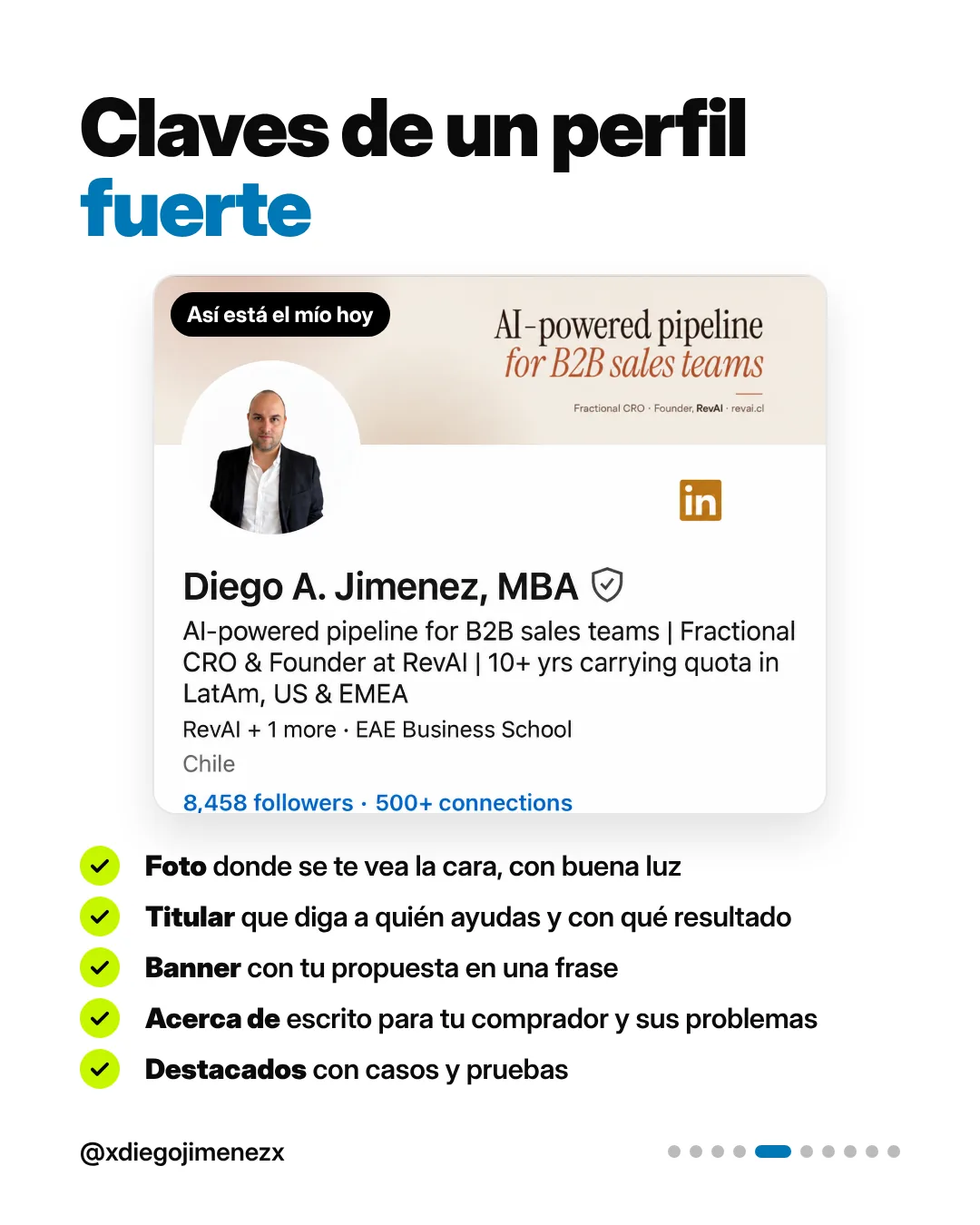
| Element | What to put there | Common mistake |
|---|---|---|
| Photo | Your face, good light, simple background | A cropped event photo or sunglasses |
| Headline | Who you help and what result you deliver | Just your title: “Sales Director at X” |
| Banner | Your value proposition in one line | The default banner or the company logo |
| About | Your buyer’s problems and how you solve them | Your work history in first person |
| Featured | Case studies, results, useful content | Empty |
My headline, for example, says what I do and for whom: AI-powered pipeline for B2B sales teams. Years of experience come after. Buyers read what’s useful to them first.
Who should you connect with on LinkedIn to sell?
Connecting with everyone fills your feed with noise. Connect on purpose:
- Decision makers at your target accounts: VPs, directors, owners.
- Influencers: team leads and day-to-day users. They push the decision from the inside.
- Your network that moved: former colleagues and former customers who changed companies. You show up with trust already earned.
- People who comment on your prospects’ posts: they’re in the same conversation as your buyer.
A note on volume: LinkedIn caps weekly invitations and flags patterns that look automated. Twenty well-chosen invites beat two hundred random ones.
How to build the relationship before asking for a meeting
Connecting is half the work. The other half is getting the person to want to keep talking to you.
- Comment before you message. Something with substance that shows you read the post. “Great post” doesn’t count.
- No pitch when you connect. Ask a real question about how they work. Ask before you present.
- Share something useful before asking for the meeting. A data point from their industry, a similar case, a template.
- Post two or three times a week about the problems your customers deal with.
What’s worked best for me is asking, and asking again, until I get to the bottom of the problem. Someone who feels heard has invested time in the conversation and wants a return on it by seeing a solution.
The full sequence: LinkedIn, email, phone and WhatsApp
LinkedIn alone is good. LinkedIn inside a sequence is better, because each channel opens the door for the next one.
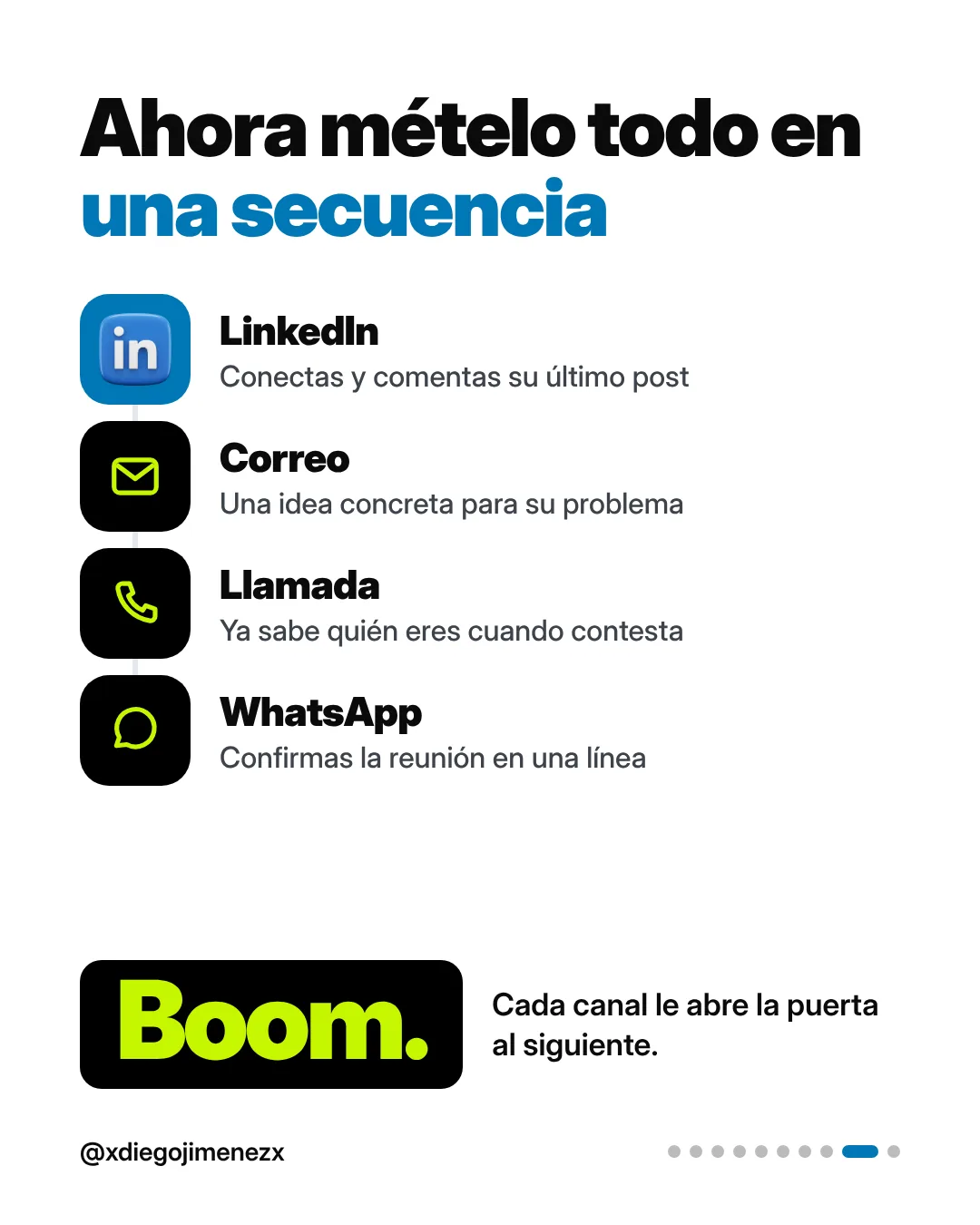
A simple sequence looks like this:
- LinkedIn: connect and comment on their latest post.
- Email: one concrete idea for their problem, tied to what you commented on.
- Phone: when they pick up, they already know who you are.
- WhatsApp or text: confirm the meeting in one line. In the US, a short text or a LinkedIn message does the same job.
The order changes by account, but the logic holds: nobody gets a cold message from someone they’ve never seen.
My numbers: from 2 to 17 meetings a month
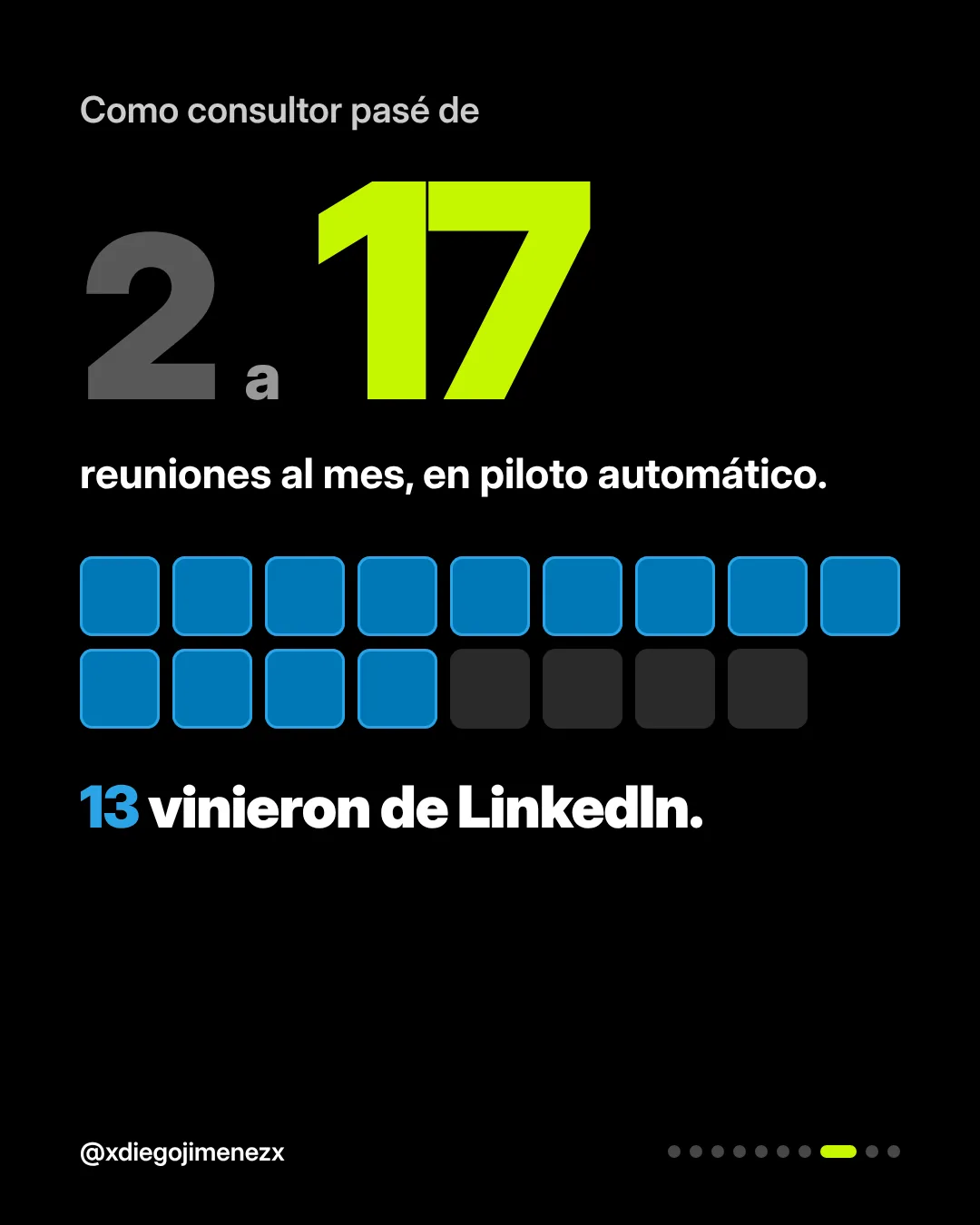
When I started consulting, I had 2 meetings a month. After fixing my profile, connecting on purpose and putting LinkedIn inside a sequence, I got to 17 meetings a month on autopilot. 13 came from LinkedIn.
Nothing exotic. I was consistent. In sales, consistency beats talent, and LinkedIn rewards exactly that.
If you lead a sales team, the job is making sure every rep has a profile that sells and a weekly routine they can actually keep. At RevAI we build that system for sales teams that want more meetings and stay with them until it sticks through our adoption and results service. If you want the bigger picture of where AI fits, I also wrote about building an AI sales strategy.
Part two: how I automate all of this with AI
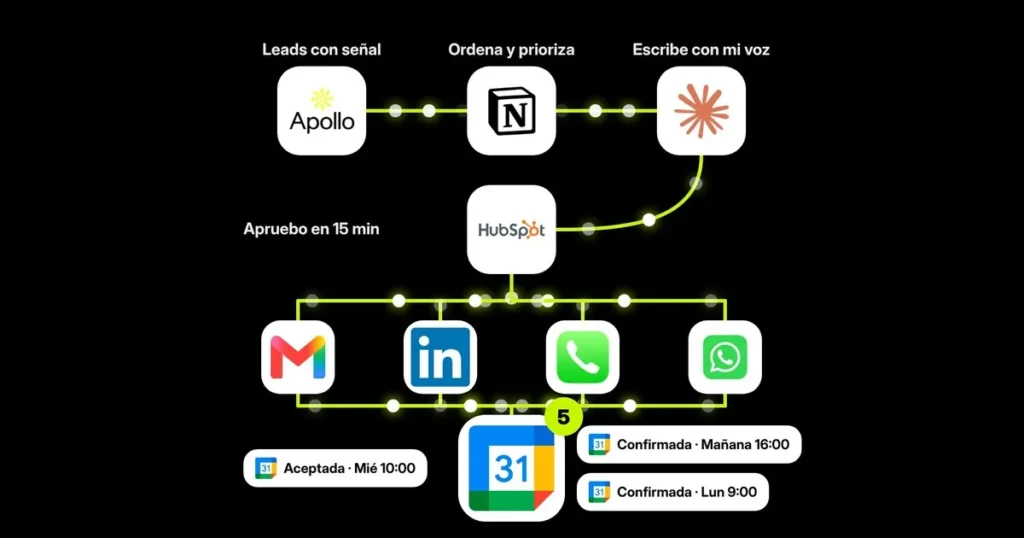
The question I get most after sharing these numbers is how I keep the volume up without spending my day prospecting. The answer is a flow that runs overnight: Claude prioritizes leads, looks for buying signals, writes in my voice and leaves everything ready for a 15-minute review in the morning.
I walk through it step by step, with the tools, the numbers and a video of the flow, in part two: AI sales prospecting automation.
FAQ
Should I prospect from my personal profile or the company page?
Your personal profile. The company page adds credibility, but sales conversations happen between people. Your profile gets more reach and builds more trust.
How many LinkedIn invitations can I send per week?
LinkedIn sets a weekly cap that varies by account and history. Instead of pushing the limit, be selective: personalized invites to people you share context with perform far better.
Do I need Sales Navigator for LinkedIn prospecting?
Not to get started. A strong profile, good searches and consistency will book meetings. Sales Navigator helps once you have a routine and want sharper filters and warm paths.
How often should I post?
Two or three times a week is a pace a sales leader can sustain. Three useful posts beat ten generic ones.
How long until it pays off?
It depends on where you start. With a clean profile and an active sequence, the first conversations show up within a few weeks. The volume that changes your month comes from consistency.
Want us to build it for your team? Let’s talk.